Tuesday, March 30, 2010

Holla to the Collards! Don't hate.


There is a silver lining to every green. What!

Poor little collard, trying so hard to stand out on the produce shelf. Screaming "pick me" in gym class, only to be outshone by it's more familiar green sisters. "It's just not fair. If only people knew." The little collard told itself.

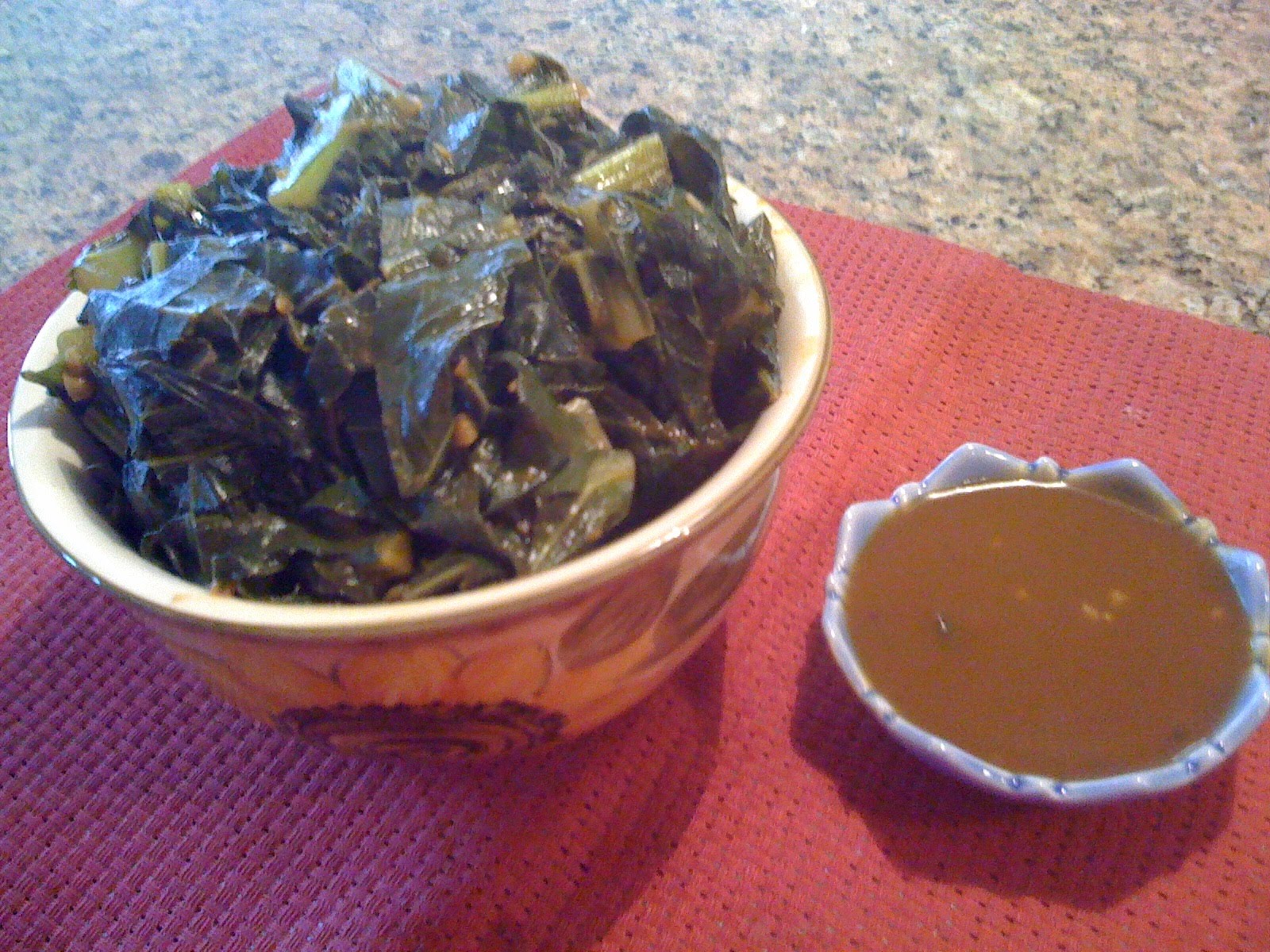
OK, fantasy literature aside, I have to say that this beautiful, tender green did not always have my heart. I wanted to love ALL greens, knowing the major health benefits (<= you want to read this) to having them in my daily diet, but found some of them to be really bitter and only forcibly edible. Collards were at the top of that list, until I found that a longer cooking method makes them deliciously unavoidable! I mean, that's how they do it in the south, right? So...

This recipe calls for cooking the collards in a good amount of vegetable broth, and you might wonder what to do with the excess broth when they're done. Do not discard! This broth makes for a very nutritious gravy, containing water-soluble vitamins and minerals that have been leached from the greens. And, it is very tasty. You can use this gravy, which is known as pot likker (I still laugh at the term), to top off accompanying meat, add it to soups/stews, or as it's done in the south, serve it with some corn bread for dipping. Yum!

Serves 4 as a side dish
1 large bunch of collard greens
2 cloves of garlic (1tbsp), minced
2 1/2 cups of vegetable broth or meat broth (about enough to just cover the greens in the beginning)
1/4 teaspoon sea salt
1/2 tablespoon olive oil

1. Rinse collard leaves under cold water. Chop off the rough ends of the stems and discard. Stack and roll into a cigar shape and then slice into 1" strips.
2. Heat oil over medium/low heat in a medium saucepan. Add garlic and saute for 1-2 minutes.
3. Add the greens to the pot and stir around to coat for 1-2 more minutes.
4. Season with salt, add broth and bring up to a simmer on medium high heat.
5. Cover, reduce heat to low. Cook for about 35-45 minutes or until greens are very tender and not bitter. Check about half way through and add more broth if needed. Because the size of greens may vary, general rule is there should always be enough broth to cover at least half of the greens during cooking.
6. *Optional - squeeze fresh lemon juice over them before serving.

To be continued...
Next stop: The mustard green

Monday, February 1, 2010

Food, People and Gratitude


Maybe it's the Italian in me, but when I think about food, I think of friends, family, laughter and good times (OK, and a nice glass of red...for those of you who know me)! Or, maybe I'd like to credit my heritage on this thinking, but really I know that it's because food brings people together, no matter what the culture. It has since the very beginning, and it will until the end. When we share the experience of food with others we connect on a deeper level, with all of our senses engaged, and through this our memories of times together are enhanced and last longer. It is the celebration and the nurturing of a loved one. It is the engagement of our common ground, where it is abundant and where it is scarce. It is for these and many more reasons, that food is the one thing I never forget to be grateful for.

This recipe for turkey and quinoa meatballs began with the idea to make a healthy meatball, and ended with a collaboration of ideas from a sister and friend. Once again...food bringing people together! Thanks to Lisa and Amanda for their input on this recipe.


Turkey and Quinoa Meatballs
Serves 6

1 lb of ground turkey breast
3/4 cups of cooked quinoa - What the heck is quinoa? Click it.
2 cups of baby spinach
1/4 cup of pine nuts
1 egg
1/4 cup of onion, finely diced (pulse diced onions in a food processor to make them fine)
1 tbsp of minced garlic (about 2 large cloves)
1 tbsp of miso tamari, or soy sauce
1/2 tsp salt
1/2 tsp pepper
1/2 tsp oregano
1 tbsp grape jam * What, you ask? This is what happens when you look around the refrigerator for ketchup, you don't find it and then you start to get ideas. Trust me, you won't taste grapes and you won't want to roll your meatballs in peanut butter! The jam adds a bit of depth to the meatballs while balancing out the savory flavors.

Preheat oven to 425

1. To cook quinoa, bring 3/4 cups of water to a boil. Rinse 1/2 cup of quinoa and add to pot with a pinch of salt. Cover and reduce to low, simmering for about 12 minutes or until water is absorbed and quinoa is fluffy. Becuase it can be tricky to cook very small amounts of quinoa, this amount makes extra. Just measure it to 3/4 cups after it's cooked and then you get leftovers!
2. To cook the spinach, put it into a steamer basket and rest it over the quinoa during it's last 2 minutes of cooking with the cover on. Or simmer in 1/2 cup of water over meduim/low heat for 2-3 minutes or until wilted.
3. Toast the pine nuts in a dry skillet over medium/low heat for about 3-4 minutes or until fragrant.
4. Chop the spinach into small pieces and squeeze out excess water. In a large mixing bowl, combine the spinach, cooked quinoa, pine nuts and all other ingredients. Mix well.
5. Line a small baking sheet with foil and drizzle with olive oil, coating a thin layer of oil over the entire surface. Form mixture into approximately 15 meatballs and lay out on baking sheet. Bake for 25 minutes.

Wednesday, January 20, 2010

Give Me Some Meat!


It was 3am this morning and BOING! My eyes popped wide open with only one thing on my mind. Meat, meat and more meat. Frisky ladies get your minds out of the gutter! I'm talking about red meat, and the redder the better. Brace yourselves vegetarians, I'm going to go out on a limb here for a minute. You might quiver, but please hear me out.

During my course at Integrative Nutrition and in the journey I've embarked on to figure out my own body (it's needs, it's likes and it's utter disappointments), I have learned quite a few things. One of which is that eating in harmony with the seasons is as essential to my health as getting the vitamin D that is severly lacking in the winter. In the past years, by the time February arrived, I found myself feeling sluggish, depressed and diagnosed anemic. Sound familiar? This baffeled me for some time. I mean, I ate really well (so I said to myself). Lot's of salads, lean protein, minimal animal products, tons of veggies, took vitamins, dotted my i's, crossed my t's. You get the point! But how could I have felt so poor? And HOW on earth could I have been anemic when I ate greens every day? Well, what I've come to learn is that this is a fantastic diet when it's warm out and when my body needs to detoxify, cool itself off and lighten up! But fast forward to the present =====> it is winter...and here I am,...freezing cold in Chicago and getting woken up from dreams of grass fed beef.

We are all different. We have different bodies, blood types and physical stature. (Not to mention hair color, sense of humor and preference of Leno vs. Letterman). So why would we expect for one diet to work for us all? When you shopped for a wedding dress/tuxedo, did you buy it off the rack and walk away with the perfect fit? OR did you decide which one you liked and pass it on to the professionals to make it fit you like a glove? More on this

So what did I make after being jolted out of a deep sleep with meat on my mind? Well, stout braised beef stew, of course.

Serves 4-6

1 pound of stew beef, cut into 1/2 inch chunks.
1 small yellow onion, diced
4 small/medium carrots, roughly chopped
1/2 daikion radish, roughly chopped (optional - Daikon radish is great for breaking down fats)
3 celery stalks, thinly chopped
1 large potato of your choice, cut into 1/2 inch pieces
1/2 cup of wheat flour (gluten free, omit the flour or substitute with GF flour)
1 tablespoon tomato paste
6 cups of beef broth
1 cup of good stout beer (gluten free omit stout, no biggie)
olive oil

1. Season the wheat flour with 1 teaspoon of salt and 1/2 teaspoon of pepper. Toss beef around in flour to coat, shaking off excess.
2.Heat 1 tablespoon of olive oil in a large soup pot. Add carrots, celery and onions. Saute over medium heat for about 10 minutes or until vegetables soften.
2. Remove vegetables from the pot and set aside. Heat another tablespoon of olive oil in the pot, add the beef and saute over medium heat, turn beef to brown on all sides. About 5 minutes.
3. Add vegetables back into the pot. Add the beer, stock, potatoes and tomato paste. Bring to a boil, partially cover and reduce to a simmer.
4. Simmer for approximately an hour, or until beef is tender and broth has thickened.

Monday, December 7, 2009

Bamboleo Jambalaya


Let me start off by saying that the title of this post is based on the extremely loose connection that Bamboleo is my favorite Gypsy Kings song, and sometimes I like to blast it when I'm cooking! Anyway...

Can something with andouille sausage REALLY makes it's way onto a blog titled "Journey to Good Health", you ask? Well, the answer is yes. What I go for here is home cooked 'real food' that is as close to natural as I can get. In this recipe I used an organic, no nitrate and gluten free sausage made by Wellshire Farms that I purchased at Whole Foods.

There are many ways to vary jambalaya. In this recipe here, I substituted ground chipotle peppers for the cayenne pepper that is traditionally used. It is a little less spicy and adds a nice subtle smokey flavor. And, I also (of course) used brown rice. I mean, COME ON! Don't you want to get down with all the benefits of the whole grain? And in this dish, even the white rice die-hard's will not know the difference! Also, usually this is a 1 pot recipe that calls for cooking the rice in with the rest of the ingredients, but I kept them separate to show another way to use leftover rice.

Ingredients
Serves 6

1 2-pound bag of frozen peeled and deveined shrimp, thawed with tails removed.
1 package of andouille sausage (4 sausages)
2 red bell peppers, cut into strips
1 medium onion, diced
1 clove of garlic
8 oz of frozen peas
2 cups of diced tomatoes
1 8oz can of tomato sauce
2 cups of brown rice (4 cups cooked)
1/2 cup of vegetable stock
2 tablespoons of fresh thyme
2 tablespoons of fresh parsley
2 teaspoons of ground chipotle pepper (or more if you like it HOT!)
2 tablespoons of olive oil
salt & pepper

1. Heat olive oil in a large skillet over medium heat. Add the onions and peppers and sautee for about 5 minutes or until they begin to soften. Then add the garlic and cook for a few more minutes.
2. Add the shrimp, andouille sausage, diced tomatoes, thyme and parsley. Season with 2 teaspoons of salt, 1 teaspoon of black pepper and the ground chipotle pepper. Continue to saute for a few more minutes to blend the flavors.
3. Add the vegetable stock, tomato sauce and peas. Bring it to a gentle simmer and cover. Let simmer over medium/low heat for about 10-15 minutes. Stirring often.
4. Now, add the cooked brown rice to the mixture, gently and in batches. Mix thoroughly.
5. Reduce heat to low and let it sit (covered) for about 10 more minutes to let the flavors go through the rice.
6. Taste/adjust seasonings.

Thursday, December 3, 2009

Honestly, are you kind?

OK, let's take a break from the recipes for a minute to gather up some food for thought.

The holidays are over. If "thank god" is what you say, then I must admit, I'm with you. What I mean is that I'm not sad to bid farewell to the rushing, stressing and over-indulgence that seem to be their evil partner in crime (although the indulgence part is always fun for a while!). So why do I bring it up? Well, because along with the above recountal, there is also the spirit of giving and kindness associated with the season, and once it's all said and done, these too can wind up in the recycling bin for another year. Something to think about and remember going forth in the new year?? Put up with me here...

The spirit of giving. The thought of it drives me to consider the traits of humankind and dive deep into the introspection of my own core values and beliefs. But it is not just about the giving, it's what lies behind the giving. People feeling good when they give.

Most of us display unconscious acts of kindness every day. Holding the door open for a stranger, being polite to the checkout clerk, letting a fellow driver go in front of us on a busy road. We do this for various reasons, but whatever the reason, we are spreading kindness and sending out a positive flow of energy. Kindness creates a sense of warmth and openness that allows us to communicate much more easily with other people. It generates a spirit of friendship in which there is less need to hide what we feel or what we're doing. As a result, feelings of fear, self-doubt and insecurity are automatically dispelled; while at the same time, other people find it easier to trust us too. (Got that from the Dalai Lama!).

Now I'm no psychology expert, but it's obvious to me that there is something to be looked at here. We were all born the same. Innocent, untrained and perfect. We laughed when we wanted to laugh and cried when we wanted to cry. We were honest and (I believe) that we were all kind. But as we grew into adults, many sequences of events took place in our lives. These events shaped our perception on how we should think, feel and act. A bi-product of this happening is that we distanced ourselves from our truth, and through a desire to protect ourselves, we forgot how to be honest (another topic for another time).
There are so many values to consider when figuring out where we stand as human beings. How do we want to live our lives - what is important to us - how do we want to interact with others? Are you jaded and cynical? Are you honest and kind?

Monday, November 16, 2009

A new twist on an old favorite


Dear hummus, my friend and life long go-to snack, oh how I respect thee and am utterly grateful for those who pioneered your existence. I have yet to meet a person who doesn't adore you for your creamy texture, versatility and flavor. I will forever be your cracker.


Phew! Glad I got THAT off my chest. Well, now that the garbanzo is out of the can, I can share a new twist on this old favorite. The inspiration came to me when I was talking with some girlfriends about healthy snack recipes, and wanting to incorporate seasonal ingredients to otherwise common foods. An easy way to jazz up something ordinary and impress your house guests during the holidays, perhaps?


So here is the recipe for my sweet apple and walnut hummus. Allergic to walnuts (physically allergic or mentally allergic)? You can substitute with your favorite nut. There are no rules with hummus except that breaking the rules can sometimes result in a tasty new idea! Be adventurous.


Sweet Apple and Walnut Hummus

1 can of chick peas (garbanzo beans)
1/2 clove of chopped garlic
2 tablespoons of sesame tahini paste
1 tablespoon of lemon juice
1 apple
1/2 cup of shelled walnuts
4 tablespoons of fresh parsley
1/4 cup of water
1/4 cup of extra virgin olive oil
salt & pepper to taste


1. Drain and rinse the chick peas and put into a food processor with the tahini, garlic, lemon juice, 1/2 of the apple, 1/4 cup of the walnuts and 2 tablespoons of the parsley. Also add about 1/2 teaspoon of salt and 1/4 teaspoon of pepper to start and then adjust seasonings after tasting.
* Note: You will be putting 1/2 of the apple, walnuts and parsley into the hummus and using the other half of them to garnish the top after.

2. Begin pulsing to combine ingredients, slowly adding the oil in through the spout until blended. Now continue pulsing while adding the water in through the top. Add or leave out some water depending on desired texture.

3. Chop up the remaining 1/2 apple and add it with the remaining walnuts and parsley to the top of the hummus after it's plated. Serve and enjoy with your favorite crudite.
*Note: You can make this a day in advance and store in the refrigerator. Just leave out the extra toppings until you're ready to serve.

Wednesday, July 29, 2009

In a recent trip to the emergency room, I discovered several things about our health care system first hand that were upsetting, disturbing and down-right bewildering! One of which I will share here in this story. It is about what to consider when using antibiotics, and how there may be more to think about than what we are told from our health care professionals.

So there I lay....
wearing my "Just Say No to GMO" tank top, waiting for the Doctor to come in and tell me what the plan was to take care of this extreme infection moving it's way up my leg from a cut on my foot. I was far from oblivious to the irony of this situation; Sunday night out celebrating my graduation as a Holistic Health Counselor and Monday night being admitted to the hospital. But this is where medicine is truly essential and amazing, saving lives and taking control of the 'out of control'.

So in came the Doctor...
and I was informed of the inevitable obvious; that I was in need of some antibiotics and that I would be spending the night. Needless to say, there was no excitement from me. Pillow fights and ghost stories would surely not be taking place here and I could definitely not expect a movie or some popcorn. But none the less I was where I needed to be and I knew that.

That leading me to the first of my discoveries.

My first reaction when I heard the news that I would be given extreme doses of antibiotics was utter disappointment. Along the way, I have learned so much about what goes on in our "gut" and why we need the friendly bacteria that reside there:
  • They are a first line of defenders for our immune system.
  • They enhance B complex vitamin production.
  • They can lower cholesterol.
  • They have anti-cancer capabilities.

Unfortunately, antibiotics kill off all of the bacteria, not just the bad, and it is up to us to put the good ones back in.

So with that in mind...
"Hey Doc., what about my friendly flora?" I asked, and the Doc. chuckled as he exited the room, making a barely audible statement about how everyone should take a probiotic supplement. Ha ha ha, I thought. Wait, but no, I was being serious.

At that point I went on to request a probiotic supplement several times, each time hearing "sure we should be able to get you that", but never finding it on my bedside wheeling cart. Why on earth was this so difficult? I wondered.

It then occurred to me that I would only receive one part of the healing process here and this was what disturbed me. How can there be a real follow-up plan for patients exiting the hospital when the remedy is so incomplete? What about all the people who come through here who have no idea about the necessity of healthy intestinal bacteria? Who think that the only reason to eat yogurt or take a probiotic while on antibiotics is to avoid getting the dreaded 'other' infections. And I don't know about you, but before I knew about this, I was often not persistent with these preventative measures if I did not feel the need to be.

I feel that this is just one example of the incomplete treatment that people receive from our health care industry.

Then I was given the food menu....
You always hear the same complaints about hospital food, right? "It's gross, I wouldn't feed this to my dog, did they find this on the moon?" etc. etc. etc. Well, although the complaint department in my mind is in agreement with these statements, how about considering this: This is a place full of people who are sick...where are the options for the foods that heal? Why is it so difficult to put together a menu with whole foods and real foods that taste really great and nurture the body? So making the best of the menu options at hand, I requested some real food. The items I ordered were not on the menu, I had to ask for them and the choices were limited.

This raised the observation for me again that there is a big piece missing here. Although the treatment that I received was absolutely necessary and the hospital did a fine job of getting me "back on my feet", I was only given a part of the "solution". I feel that there is change that needs to take place in this industry that will tie in the scientific and hard thought research of medicine with the holistic and well based principles of living for optimum wellness.


Wouldn't you agree?


Probiotics are found in fermented foods and can also be taken as a supplement.

Examples of some fermented foods:

Yogurt

Sauerkraut

Soy Sauce

Tempeh (fermented soy)

Kefir (fermented milk drink)

Natto (fermented soy)

Kombucha (fermented Tea)